Projects
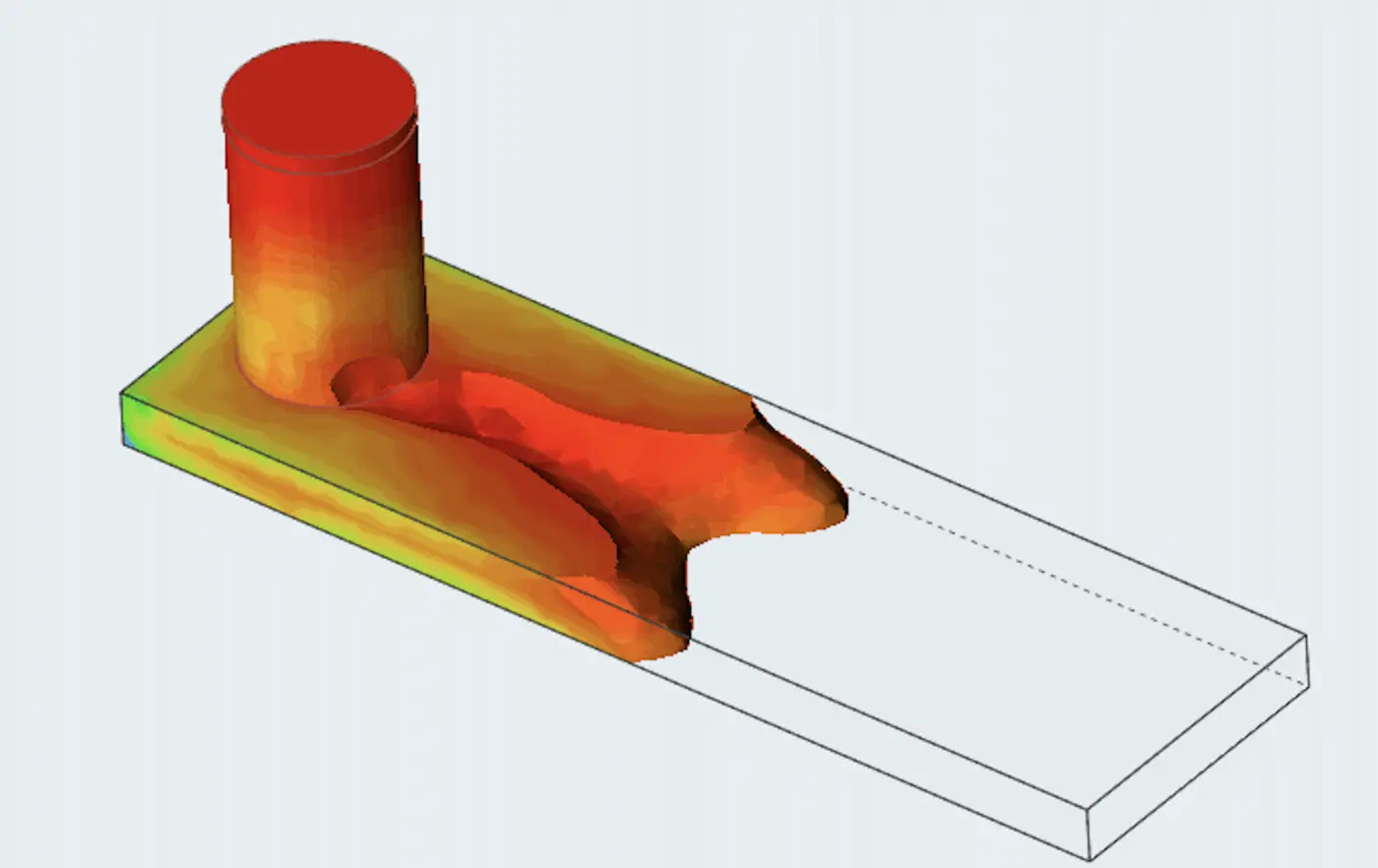
Verification of Mold Filling and Solidification
Verification of a mold-filling and solidification setup against the aluminum alloy A356 plate casting benchmark of Carlson, Ou, Hardin, and Beckermann (Metallurgical and Materials Transactions B, 2002). Predicted porosity is evaluated using the standard Niyama criterion and compared against the reference case to confirm the setup's accuracy before extending it to production geometries.
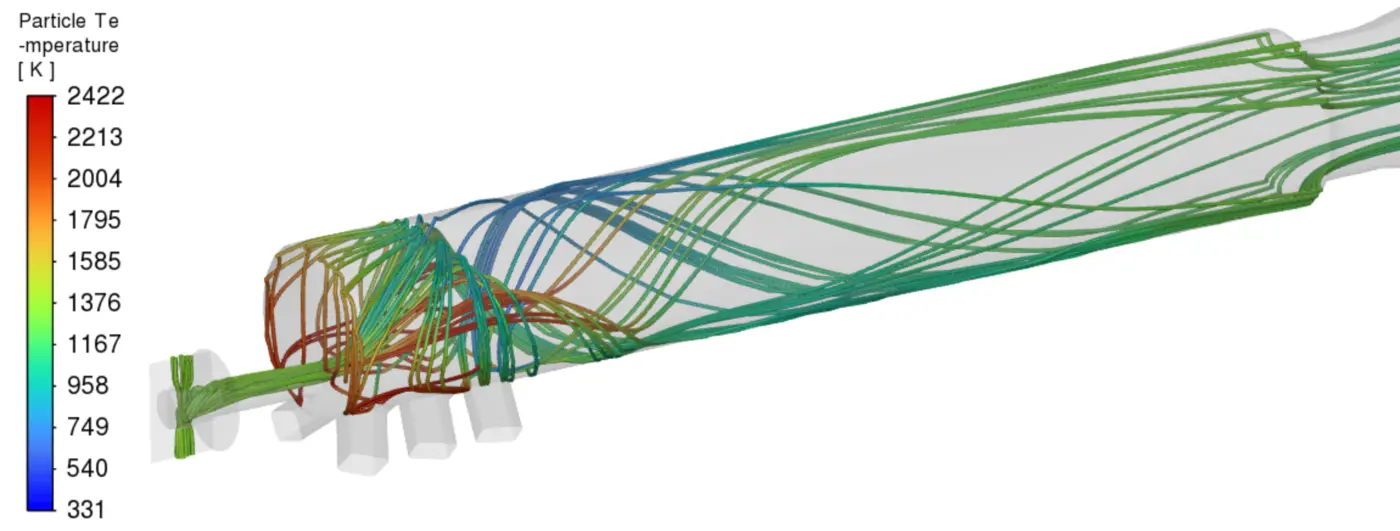
Heterogenous Combustion in Solid-Ducted Rocket
Coupled simulation of the direct-connect gas-generator and secondary combustion chamber of a boron-based solid-ducted rocket. Fuel-rich gas containing boron and carbon particles, generated upstream by a solid gas generator, mixes and combusts with incoming air, tracked using a discrete phase model for the particles and an SST k-ω turbulence closure for the flow.
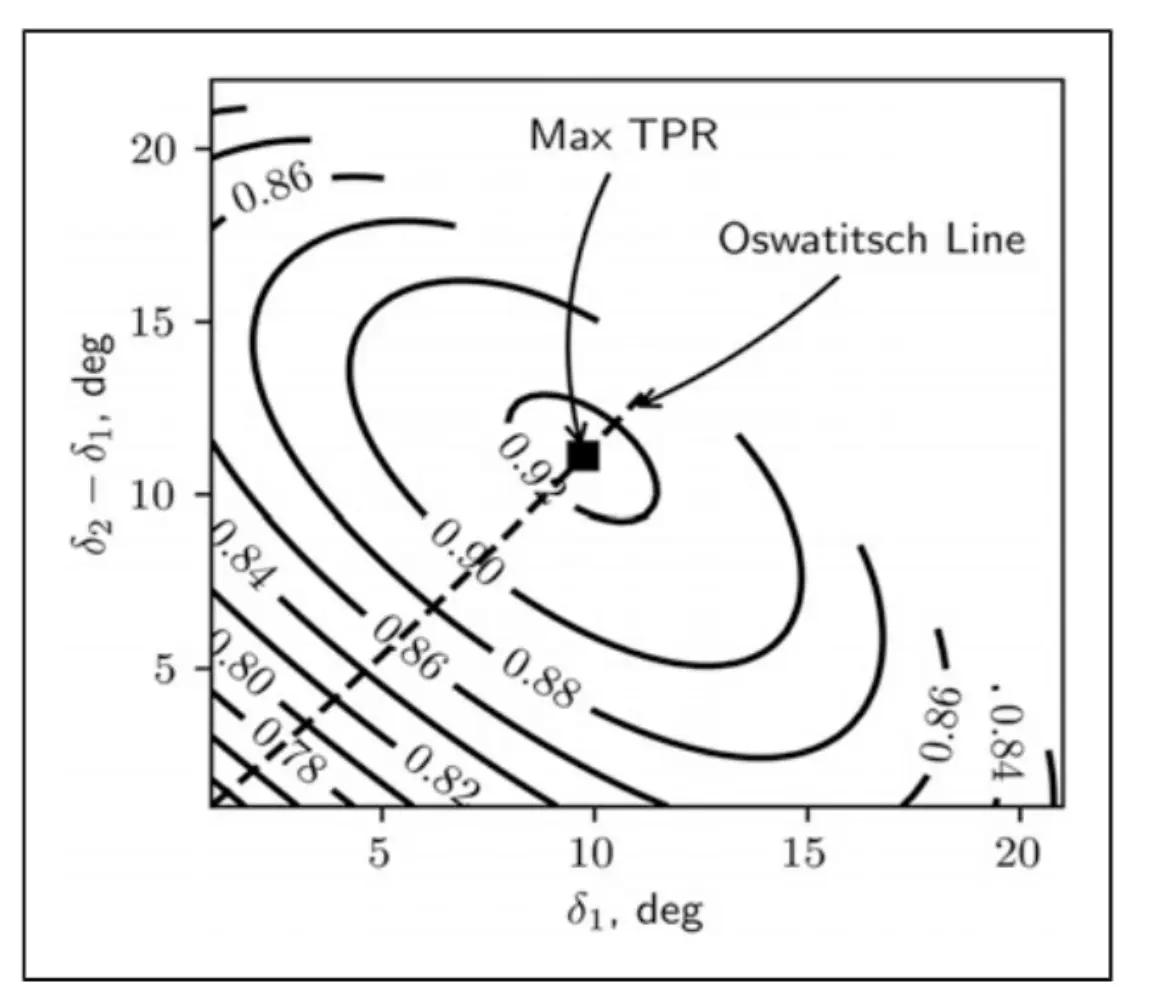
Supersonic Intake Multi-Objective Optimisation
Full optimisation framework for arbitrary supersonic intake geometries using Axiomatic Design Theory to decompose conflicting functional requirements, Latin Hypercube sampling with high-fidelity RANS CFD, a Kriging surrogate model, and a Multi-Objective Genetic Algorithm to generate Pareto-optimal configurations trading total pressure recovery against pressure drag. Results form the basis of two AIAA AVIATION 2023 conference papers and Chapter 7 of the textbook Computational Design and Optimization of Supersonic Intakes (Routledge, 2025).
Laminar-to-Turbulent Transition Modelling
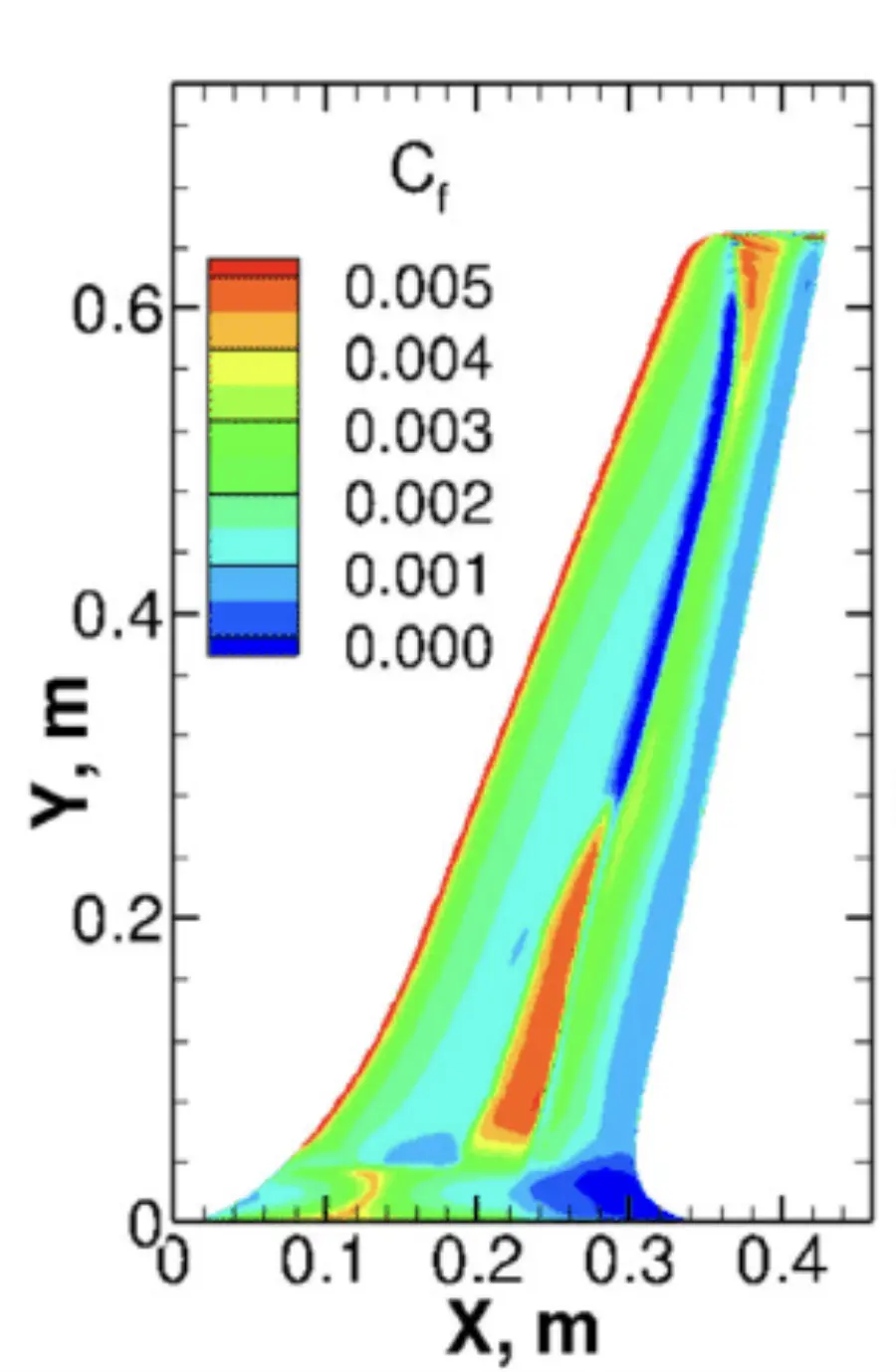
Local-correlation-based zero-equation transition model compatible with standard two-equation RANS solvers, encoding transition onset as a function of shape factor, free-stream turbulence intensity, and pressure gradient — with no additional transport equations and negligible solver overhead. A dynamical-systems stability analysis identified spurious fixed points in common intermittency formulations responsible for convergence failures. Validated against flat-plate and turbomachinery test cases and published in Computers & Fluids (2021) and AIAA Journal (2021).
Porous-Medium Passive Flow Control for Transonic SWBLI
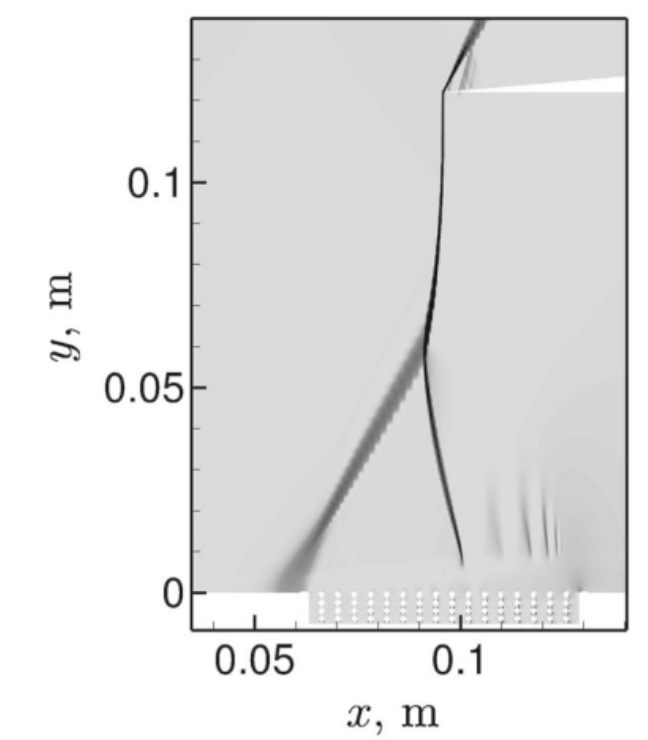
Numerical investigation of porous-surface passive control as a method of reducing shock-wave/boundary-layer interaction (SWBLI) losses in transonic regimes. The porous medium enables controlled mass transfer across the interaction region, attenuating the peak adverse pressure gradient and delaying separation without discrete protrusions or moving parts. Published in Shock Waves (2021).
Micro Vortex Generator Design — Ramp and Wedge Types
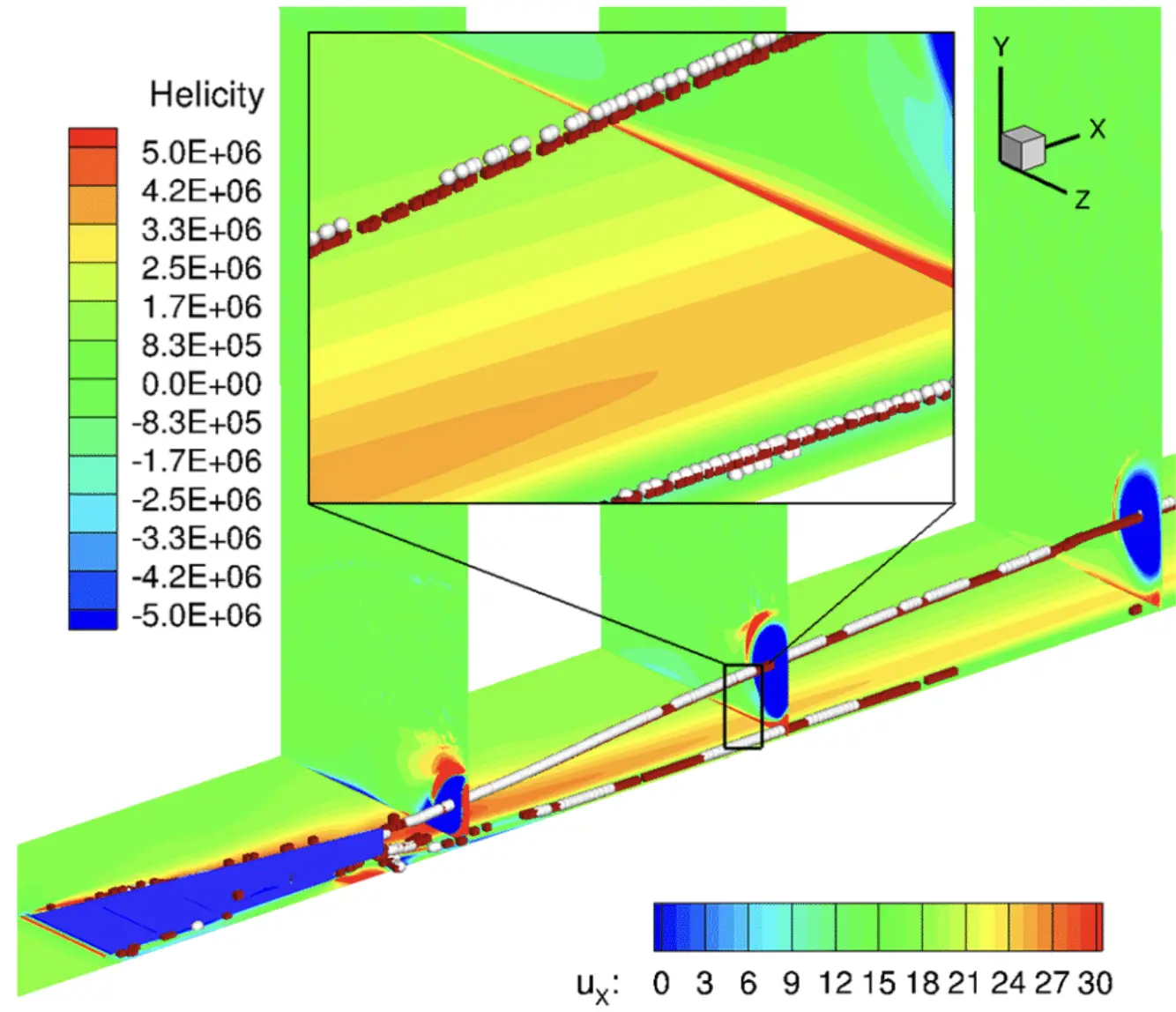
Systematic evaluation of ramp-type and wedge-type micro vortex generators for boundary-layer re-energisation upstream of high-speed shock-wave/boundary-layer interactions. Introduced a swirl centre tracking post-processing methodology to quantify vortex strength and decay trajectory, enabling systematic comparison across device geometries and operating conditions. A follow-on study characterised tandem arrangements. Published in AIAA Journal 56(9) 2018 and AIAA 2020-2961.
FEST-3D — Open-Source Structured CFD Solver
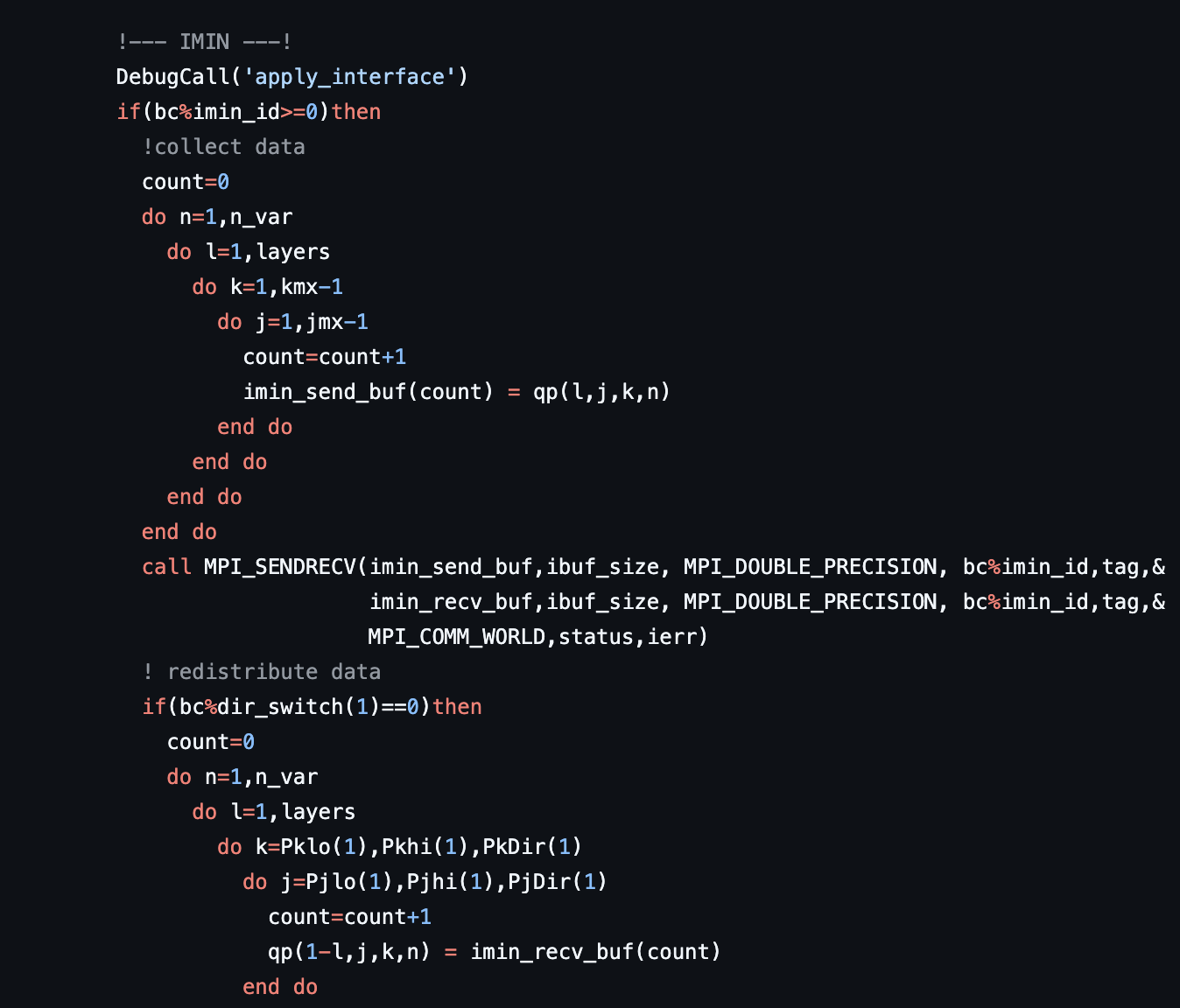
Lead developer of FEST-3D (Finite-volume Explicit STructured 3-Dimensional solver): a modular, multi-block structured RANS solver supporting MUSCL/WENO reconstruction, explicit Runge-Kutta time integration with local time-stepping, and pluggable turbulence/transition models. Used as the primary in-house solver for the intake optimisation and transition modelling studies above. Published in Journal of Open Source Software 5(46), 2020.